Syrian Troops in Yemen? What the Conflicting Deployment Figures Tell Us
-
November 11, 2026
- Posted by: Syria Monitor
- Categories: DATA & MONITORING, Incident Tracking, RESEARCH, Security & Conflict, SITUATION ASSESSMENT, Timelines
Syria on the Brink of the Yemen War: The Saudi Partnership and the Limits of the Mecca Pact
Analysis | Syria Monitor Strategic Research Center
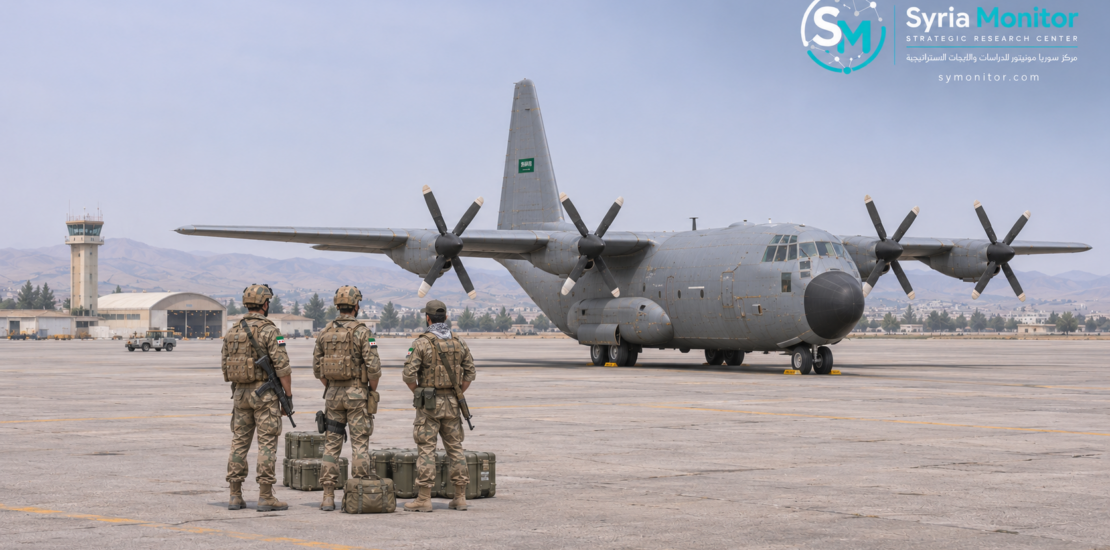
From dozens of military advisers to an initial force of around 600 personnel and estimates running into the thousands, reports have offered sharply different figures for Syria’s potential military role in Yemen. The discrepancies reflect differences in what was reported and where. Some accounts described Syrian personnel providing advice and training inside Saudi Arabia, while others said Riyadh had asked Damascus to send troops to fight the Houthis inside Yemen.
On 9 November 2026, Syrian Foreign Minister Asaad al-Shaibani denied that Syrian forces were in Yemen or that Damascus had plans to send them in the near future. As of 10 November, publicly available evidence had yet to establish that Syrian forces were taking part in combat inside Yemen. The prospect, raised around the time Damascus and Riyadh signed a military cooperation agreement, nevertheless puts two questions before Syria: what could it gain from intervening, and could it secure guarantees commensurate with the risks?
Dozens of Advisers, 600 Personnel and Thousands of Fighters: What Do the Figures Mean?
On 6 November, two Syrian military sources and a senior US official were reported as saying that dozens of Syrian military personnel had travelled to Saudi Arabia. According to that account, Syrian advisers and training teams were assisting Saudi and Yemeni units inside the kingdom. This figure concerns personnel reported to have already arrived on an advisory and training assignment.
On 7 November, Yemeni military and government sources were reported as saying that hundreds of Syrian troops had deployed on both sides of the Saudi–Yemeni border. One source described an initial phase involving around 3,000 fighters, while a Yemeni defence ministry source said the arrangements could eventually involve more than 10,000. Those figures describe plans attributed to Yemeni sources. No publicly announced agreement has confirmed the numbers or their implementation.
On 8 November, a separate report described preparations to send an initial contingent of around 600 special forces personnel to Saudi Arabia. The officials cited in that account said Syrian fighters had yet to be sent to Yemen. The figure of 600 therefore refers to a proposed deployment inside Saudi Arabia, while the figures in the thousands come from separate accounts of a possible phased deployment. Combining them would obscure the dispute over whether any Syrian force has crossed into Yemen.
Why Would Saudi Arabia Seek Syrian Combat Support in Yemen?
Reports on the talks between Riyadh and Damascus indicated that Saudi Arabia asked Syria to consider sending troops to fight alongside Yemeni government forces against the Houthis. The discussions reportedly also covered more limited roles, including training and advisory work inside the kingdom and assistance with border defence. On 4 November, the two countries signed a military cooperation agreement during Syrian President Ahmed al-Sharaa’s visit to Riyadh. The announcement did not set out a combat mandate inside Yemen.
Riyadh is seeking support that could ease pressure on its own forces and improve the effectiveness of its Yemeni partner amid renewed fighting and Houthi attacks on the kingdom. Syrian personnel bring experience gained over years of fighting organised armed groups. Yemeni sources have also pointed to drone training as one area in which government forces could draw on that experience.
Cooperation through Saudi Arabia gives both governments room to expand the mission in stages. Training inside the kingdom can strengthen Yemeni units while keeping Syrian personnel away from direct combat. A deployment on the Saudi side of the border would add a defensive role. Sending Syrian units into Yemen to fight would require decisions on who commands them, what they are expected to achieve, how long they stay and who pays for their supply and protection.
The Mecca Pact and the Limits of Protection for Syria
Saudi Arabia, Turkey and Pakistan signed the Mecca Joint Defence Agreement on 7 August 2026. The joint statement treats an armed attack on any of the three countries as an attack on all three. On 5 October, the alliance’s political and defence committee announced steps to make agreed forces and capabilities available for rapid deployment inside Saudi Arabia, subject to the arrangements and laws of the member states.
The pact gives Riyadh a framework for sharing some of the burden of defending its territory with Ankara and Islamabad. Syrian participation could proceed under a bilateral arrangement with Saudi Arabia. The three founding members have announced no collective decision placing Syrian forces under the pact’s command or assigning them a combat role in Yemen.
Damascus has expressed interest in joining the pact, but no Syrian accession had been announced as of 10 November. The published text provides for the founding members to agree on how new members are admitted and for members to determine the nature and extent of assistance through a joint assessment. Damascus could therefore commit military support to Riyadh before securing a defence commitment that covers Syrian territory. That gap would matter most if Syrian involvement provoked a response from Iran or from Iraqi factions allied with the Houthis.
What Syria Could Gain from Taking Part
A limited military contribution could strengthen Damascus’s position with Riyadh and expand cooperation on training, rebuilding and equipping the Syrian armed forces. It could also give Syria greater bargaining power on investment, reconstruction and diplomatic support, while bringing Damascus closer to the regional defence framework Saudi Arabia is building with Turkey and Pakistan.
During al-Sharaa’s visit, the Saudi Fund for Development signed six concessional loan agreements with Syria’s Ministry of Finance worth more than $403 million. The loans are intended to fund projects in energy, water, health, housing and infrastructure. The timing shows the breadth of the bilateral relationship. The published documents establish no link between the loans and any deployment of Syrian troops.
In Yemen, Syrian expertise could improve the effectiveness of government forces and strengthen their negotiating position if battlefield gains lead to a political process. For Damascus, the value of taking part would depend on its ability to define the mission’s objectives and duration and secure commitments that also serve Syria’s own security interests.
The Cost of Combat for Syria’s Armed Forces and Decision-Making
The most immediate risk is that the mission expands once it begins. Casualties or the capture of soldiers could prompt calls for reinforcements, while protecting the deployed force could itself become a reason to extend its stay. The cost would depend as much on who deploys as on how many are sent. Drawing experienced officers and instructors away from their posts could affect the rebuilding of Syria’s armed forces even if the contingent remains small.
Damascus could also lose room for manoeuvre if the force depends on Riyadh for transport, supplies and funding. Syria’s ability to change or end the mission would then depend on the terms it has agreed with Saudi Arabia. The Syrian government would also face questions over casualties, the conduct of its units and the impact of operations on Yemeni civilians. The Houthis and their allies could use the participation of a foreign Arab force to rally support and sustain mobilisation.
Could Iran or Factions in Iraq Retaliate Against Syria?
If Syrian units are confirmed to be fighting the Houthis, Damascus could face greater pressure from Iran or Iraqi armed factions with ties to Tehran and the Houthis. Pressure could begin with political statements and media campaigns. The Syrian contingent itself could also come under threat in Yemen. Whether the confrontation extends to Syrian territory would depend on the scale and impact of Syria’s involvement and on how the parties weigh the cost of widening the conflict. Reports have raised the possibility of attacks by Iraqi factions, but no decision to carry them out had been publicly documented as of 10 November.
An operation by an Iraqi faction would be distinct from a decision by the government in Baghdad. Any claim that Tehran directed an attack would require separate evidence. If an operation were launched from Iraqi territory, Baghdad would face pressure to prevent the conflict from spilling across its border. A direct Iranian strike on Syria would represent a further escalation and carry consequences for Tehran’s relations with Riyadh and Ankara.
Before committing troops to combat, Damascus would need to establish who controls the mission, when Syrian forces can withdraw and what its partners would do if retaliation reached Syria. The costs of a deployment would begin as soon as troops entered the war. The value of the partnership would depend on the commitments Damascus could secure before that point.