
The Houthis at Bab al-Mandab: How the Advance Along Yemen’s Western Coast Is Reshaping Red Sea Security
- September 12, 2026
- Posted by: Syria Monitor
- Categories: DATA & MONITORING, Field Reports, RESEARCH, Security & Conflict, Yemen
No Comments
From Mokha and Mayyun to the Hormuz–Bab al-Mandab Equation: An Assessment of Battlefield Shifts, Energy Flows, and Emerging Risks to International Shipping
Syria Monitor – Research & Strategic Studies Center
12 September 2026
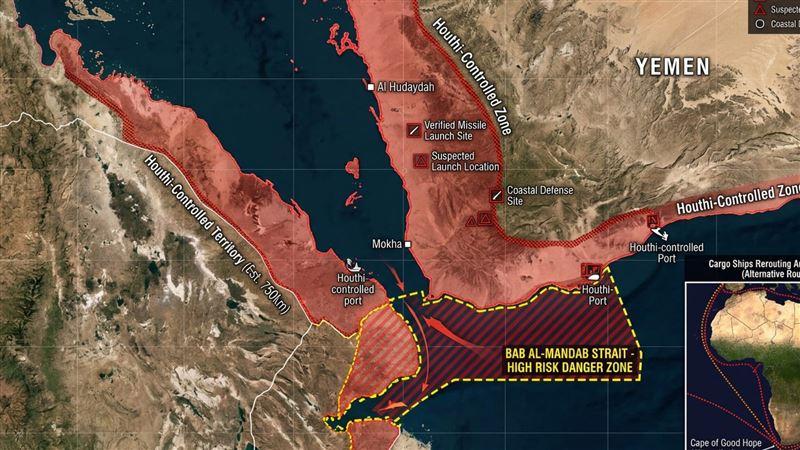
The war in Yemen entered a new phase in September 2026 following a rapid advance by Ansar Allah, commonly known as the Houthis, along the country’s western coast. Houthi forces seized the city of Mokha before advancing toward Dhubab and reaching Mayyun, also known as Perim, an island located inside the Bab al-Mandab Strait.
The significance of this development lies not merely in the amount of territory that changed hands, but in the strategic value of the geography involved. Since late 2023, the Houthis have demonstrated their ability to threaten shipping in the Red Sea using missiles, unmanned aerial vehicles, and maritime systems. They now have a physical presence on the approaches to Bab al-Mandab and inside the strait itself.
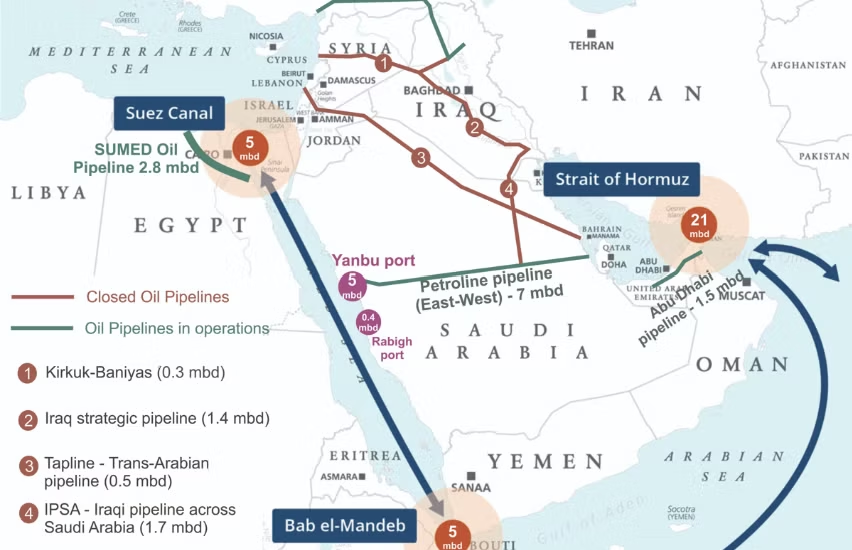
This development coincides with an exceptional shift in global energy flows. Oil and petroleum-product flows through the Strait of Hormuz fell from approximately 21.6 million barrels per day (b/d) in the fourth quarter of 2025 to 4.9 million b/d in the second quarter of 2026. Over the same period, flows through Bab al-Mandab increased from 5.4 million b/d to 8.1 million b/d.
The Houthi arrival at Bab al-Mandab therefore comes at a time when the strait has gained greater strategic importance within an energy transportation network increasingly affected by disruptions at Hormuz.
This does not mean that the Houthis are now capable of completely and sustainably closing Bab al-Mandab. It does, however, increase their capacity to threaten shipping and raise the cost of transit, creating a new regional equation in which two of the most important energy chokepoints surrounding the Arabian Peninsula could come under pressure simultaneously: Hormuz in the east and Bab al-Mandab in the west.
-
From Mokha to Mayyun: A Shift in the Western Coast Battlefield
The second week of September 2026 witnessed one of the most significant changes on the Yemeni battlefield since the period of relative calm that followed the 2022 truce.
Within days, Houthi forces launched a major offensive along the western coast, shifting the front toward Mokha, Dhubab, and the Red Sea islands.
On 10 September, UN Special Envoy for Yemen Hans Grundberg confirmed before the UN Security Council that the Houthis had taken Mokha, approximately 75 kilometers from Bab al-Mandab.
Grundberg described the developments as having transformed the risk of a return to large-scale conflict from a possibility into a “harsh reality,” noting that escalation initially concentrated in Taiz and Hudaydah had subsequently extended to Marib, Al Jawf, and Al Bayda.
The advance did not stop at Mokha.
On 11 September, four Yemeni government sources reported that Houthi forces had reached Mayyun/Perim Island, located inside the Bab al-Mandab Strait.
Government sources also reported that pro-government forces had withdrawn from the island and that the Houthis had taken Dhubab, on the Yemeni coast opposite Mayyun. The group had previously expanded toward the Hanish Islands after taking Mokha.
The new axis of Houthi advance can therefore be broadly represented as:
Hudaydah → Southern Hudaydah → Mokha → Dhubab → Mayyun/Bab al-Mandab
This represents a qualitative change from previous Houthi operations in the Red Sea. The group’s influence over the maritime corridor is no longer based solely on launching missiles and drones from positions located farther inland or along the northern Red Sea coast. It is now also linked to a ground and island presence immediately adjacent to major shipping lanes.
Why Mayyun Matters
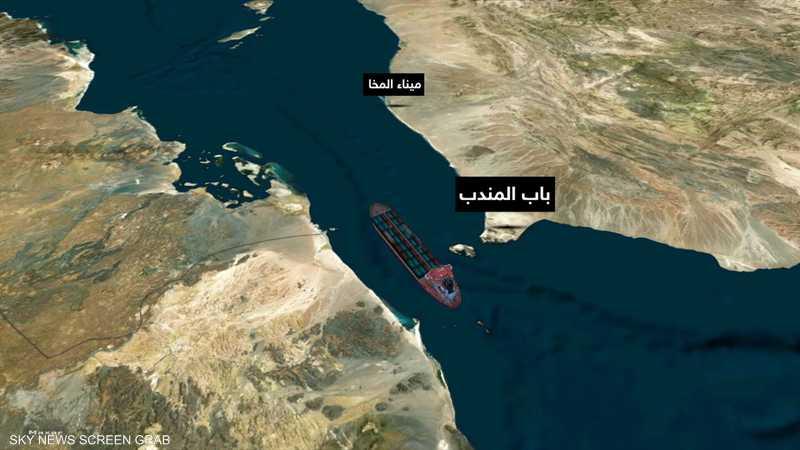
Mayyun Island sits inside Bab al-Mandab between Yemen and the Horn of Africa and effectively divides the strait into two maritime channels.
At its narrowest point, Bab al-Mandab is approximately 29 kilometers wide, making it one of the world’s most geographically constrained and strategically sensitive maritime corridors.
Mayyun’s importance derives primarily from its location.
Depending on the forces and systems deployed there, a military presence on the island could provide a forward position for maritime surveillance, reconnaissance, early warning, monitoring vessel movements, and potentially supporting UAV operations, maritime systems, or anti-ship capabilities.
However, an important distinction must be maintained between possessing territory inside the strait and controlling the strait itself.
Control of Mayyun and Dhubab does not mean that the Houthis have closed Bab al-Mandab, nor does it automatically give them complete maritime control. It does, however, reduce the geographic distance between capabilities already possessed by the group and vessels transiting the waterway, thereby increasing the operational significance of the newly acquired territory.
-
Bab al-Mandab in Numbers: What Is at Stake?
Data from the U.S. Energy Information Administration (EIA) reveal a major shift in global oil movements during the first half of 2026.
Average oil and petroleum-product flows through Bab al-Mandab stood at:
3.9 million b/d – Q1 2025
4.5 million b/d – Q2 2025
4.6 million b/d – Q3 2025
5.4 million b/d – Q4 2025
5.6 million b/d – Q1 2026
8.1 million b/d – Q2 2026
Flows therefore increased from 3.9 million to 8.1 million b/d in approximately 15 months — an increase of roughly 108%.
Of the total flows recorded during the second quarter of 2026, approximately 6.1 million b/d consisted of crude oil and condensates, while approximately 2 million b/d consisted of petroleum products.
Other estimates indicate that the volume passing through Bab al-Mandab in June alone was equivalent to roughly 7% of global oil production.
Syria Monitor Indicator | The Shift in Energy Chokepoints
A comparison of major oil transit routes illustrates the exceptional transformation that occurred between late 2025 and mid-2026:
Maritime Route |
Q4 2025 |
Q1 2026 |
Q2 2026 |
Strait of Hormuz |
21.6 million b/d |
14.9 million |
4.9 million |
Bab al-Mandab |
5.4 million b/d |
5.6 million |
8.1 million |
Suez Canal + SUMED |
5.9 million b/d |
5.7 million |
5.8 million |
Cape of Good Hope |
9.9 million b/d |
8.2 million |
9.4 million |
Source: U.S. Energy Information Administration, tanker-tracking data from Vortexa, and EIA analysis.
The figures reveal a striking strategic divergence:
Hormuz: 21.6 → 4.9 million b/d
A decline of approximately 77%.
Bab al-Mandab: 5.4 → 8.1 million b/d
An increase of approximately 50%.
By the second quarter of 2026, oil flows through Bab al-Mandab exceeded those through Hormuz by approximately 3.2 million b/d.
The timing of the Houthi advance is therefore critical: the group reached Bab al-Mandab at precisely the moment when the waterway had become more important to the regional energy system than it had been only months earlier.
-
Saudi Arabia Between Hormuz and Bab al-Mandab
Saudi Arabia possesses a strategic advantage not available to all Gulf oil producers: the East-West Pipeline, or Petroline, which transports crude oil from the kingdom’s Eastern Province across the Arabian Peninsula to the Red Sea coast, bypassing the Strait of Hormuz.
The pipeline stretches approximately 1,200 kilometers and had recently been transporting roughly 4–5 million b/d, equivalent to approximately 4–5% of global oil supplies.
However, this advantage creates another geographic dilemma.
Oil reaching the Red Sea can move north through the Suez Canal toward European markets or south through Bab al-Mandab toward the Arabian Sea and Asian markets.
Bypassing Hormuz therefore does not eliminate geographic risk. Instead, it shifts part of the dependence toward another transportation network in which Bab al-Mandab constitutes a critical chokepoint.
The vulnerability of this equation became more apparent on 11 September, when Saudi Arabia temporarily shut down the East-West Pipeline as a precaution following attacks targeting the pipeline in the Riyadh and Medina regions.
Saudi authorities said the drones involved in the attack originated from Iraq, although no group immediately claimed responsibility.
On 12 September, U.S. President Donald Trump said he believed Iran was “probably” responsible for the attack. This remains a U.S. assessment rather than publicly established evidence identifying a specific perpetrator.
Saudi Arabia’s energy infrastructure therefore faces three simultaneous layers of risk:
Disruption at Hormuz in the east;
Attacks against domestic oil transportation infrastructure;
and the Houthi advance toward Bab al-Mandab in the west.
-
What Can the Houthis Do From Their New Geography?
The strategic significance of controlling Mokha, Dhubab, and Mayyun is determined less by the size of these locations than by the military capabilities that could potentially be linked to them.
The Houthis have for years possessed a diversified arsenal that includes ballistic and cruise missiles, UAVs, anti-ship capabilities, and maritime systems. Since late 2023, some of these systems have been used against commercial and military vessels in the Red Sea and Gulf of Aden.
What changed in September 2026 is the reduction in geographic distance between those capabilities and one of the world’s most important maritime corridors.
Operationally, the newly controlled areas could provide improved conditions for:
Maritime surveillance and reconnaissance;
Monitoring vessel movements and transit patterns;
Early warning;
UAV operations;
Support for unmanned boats and other maritime systems;
and the deployment of coastal targeting systems, should such systems be moved into the newly controlled areas.
A distinction must nevertheless be made between potential capability and confirmed deployment.
As of 12 September, publicly available information is insufficient to conclude that the Houthis have already deployed coastal missile systems or other advanced offensive capabilities on Mayyun.
Movements of weapons toward Mayyun, Dhubab, and Mokha should therefore be considered among the most important indicators to monitor in the coming period.
-
Disrupting Shipping Does Not Require Closing the Strait
The Houthis do not necessarily possess the military capability required to completely and sustainably close Bab al-Mandab.
However, the Red Sea experience since late 2023 has demonstrated that a complete closure is not required to produce substantial economic consequences.
Previous attacks and threats prompted international shipping and energy companies to divert vessels away from the Red Sea and Suez Canal and instead use the much longer route around the Cape of Good Hope.
Recent estimates indicate that shipping traffic through the Red Sea fell by approximately 60% as a result of disruptions associated with the Houthi campaign against vessels since late 2023.
This means that the Houthis do not necessarily need to physically prevent vessels from transiting the strait.
Increasing the perceived probability of attack, insurance costs, and risks to crews and vessels may be sufficient to make some companies consider the Cape of Good Hope route safer despite its greater distance and cost.
The threat of disruption can therefore become a strategic instrument in itself.
On 11 September, Houthi military spokesman Yahya Saree said navigation would remain safe for all vessels except Saudi ships covered by the group’s previously announced ban.
Whether that distinction survives an escalation will depend on the rules of engagement adopted by the Houthis as the confrontation develops.
-
The Iranian Factor
Houthi military capabilities cannot be entirely separated from years of accumulated Iranian support. However, it is essential to distinguish between three different levels: support, direction, and direct operational control.
On 11 September, Reuters reported that the latest Houthi advance along the western coast had occurred, according to Iranian sources, with direct assistance and guidance from Iran’s Islamic Revolutionary Guard Corps, and that Tehran had promised the group additional funding, weapons, and officers.
Iran, however, publicly describes the Houthis as an independent ally and denies directing their military operations or treating them as a proxy under direct Iranian command.
Evidence of Iranian military and technical support for the Houthis therefore does not by itself establish that every Houthi battlefield or maritime decision is made in Tehran.
Nevertheless, the strategic value Iran could derive from the latest developments is clear: an armed ally positioned at Bab al-Mandab, alongside confrontation surrounding Hormuz, creates a second potential pressure point on the energy and maritime networks surrounding the Arabian Peninsula.
-
The Human Cost: More Than 76,000 Displaced
Behind the rapid military transformation, another displacement crisis is expanding.
On 10 September, the UN Special Envoy for Yemen reported that more than 11,400 families had been displaced nationwide since 3 September, with most originating from Taiz and southern Hudaydah.
As fighting continued, the figure rose rapidly.
In its latest update on 12 September 2026, the International Organization for Migration reported that displacement caused by the latest escalation had surpassed 76,000 people, warning of a rapidly worsening displacement crisis as fighting expanded.
IOM data indicate that Taiz and Hudaydah have been at the center of the displacement wave, while displaced populations have also moved toward areas including Lahj and Aden.
The sharp increase within days illustrates both the speed of battlefield changes and the vulnerability of civilian populations along Yemen’s western coast.
-
Five Indicators That Will Define the Next Phase
Despite the speed of the Houthi advance, front lines remain fluid, while forces aligned with the internationally recognized government have declared their intention to retake lost territory.
Five indicators will therefore be critical in determining the direction of the crisis over the coming weeks.
-
Consolidation of Control Over Mayyun, Dhubab, and Mokha
Holding the newly captured positions will be more important than merely reaching them. Large-scale fortifications or the establishment of permanent command and logistics facilities would indicate an intention to transform the advance into a long-term military reality.
-
Deployment of Advanced Capabilities to Bab al-Mandab
The appearance of radar systems, missile launchers, UAVs, unmanned boats, or specialized maritime units on Mayyun or around Dhubab would represent a more consequential development than the territorial advance itself.
-
The Nature of Maritime Operations
If threats remain restricted to Saudi vessels, this would suggest a targeted pressure strategy. An expansion of the target set would increase the likelihood that shipping companies would once again avoid the waterway on a broader scale.
-
The Saudi-Houthi Confrontation
A return to sustained cross-border strikes or their expansion toward energy infrastructure and ports would indicate that the confrontation is again moving beyond Yemen’s internal battlefield.
-
The Scale of Any Counteroffensive